The Director's Rule That Every Salesperson Should Steal
The Lesson
At 16, I turned down a rep job in Spain for a £2.50/hour film apprenticeship. Five years working under BAFTA award-winner Peter Georgi gave me one rule that changed how I approach every sales interaction. Here it is.
At 16, I put myself through a three-stage application process to get an apprenticeship at Halo Films. I did the interviews, did the tasks, and then found out they'd picked someone else.
Around the same time I was going through a six-hour group assessment day for Thomas Cook - roleplay, interviews, the works. That one I also didn't get.
So at 16 I had no university place, no job, and two rejections. Then, two weeks later, both of them called back on almost the same day.
Thomas Cook: a rep position in Spain. Sun, sea, and a year of getting paid to have fun.
Halo Films: the apprenticeship had come back around. The original candidate had pulled out. Peter Georgi - BAFTA award winner - was on the phone asking if I still wanted it. At £2.50 an hour.
I went for the obvious choice. The £2.50.
Five Years Under Peter Georgi
What Peter gave me wasn't a structured training programme. It was autonomy, variety, and projects I had to figure out myself.
I manually transcribed every word recorded - every word - and logged every shot type. I am, by my own assessment, the world's slowest typist. The irony that I later built a transcription tool is not lost on me.
I built their website, which is still live today, twelve years later. I learned editing from editors, motion graphics from motion graphic artists, camera work from cameramen. I became what you might generously call a multiskilled master of none.
The projects ranged. I scrubbed up and filmed open knee surgery. I worked on a documentary featuring Richard Branson. We delivered work for Kellogg's, St James Place Wealth Management, Renishaw. I created motion graphic adverts for TV commercials for Easy Odds and Circle Bath.
Every day was different. Every project demanded something I hadn't done before. That was the education.
The Question at the Pub
One evening, Peter asked me at the local pub what I wanted to focus on. Not what I was good at. What I wanted.
My answer was: I want to run a business, following my passion for video and business.
He gave me the push. When I left after five years, he became my first client. I used my entire £3,000 redundancy payment - all of it - to get a Google Marketing Degree, and I set up my own video production company combining what I had learned about craft with what I now understood about marketing.
The idea was simple: create professional video content and actually help clients get ROI from it, not just deliver a file and move on.
The Scene That Was Missing
This is where the filmmaking lesson and the sales lesson collide.
When we delivered video work for clients, we would follow up to see how it had performed. Their answer was nearly always a version of the same thing: "I'm not sure how well it did, but it was seen by hundreds of people on our website."
That answer told me everything. The client had invested real money expecting ROI. But the ROI they needed came from what happened after the video was delivered - from promotion, distribution, and follow-through. That work required a new budget and, usually, a different agency. So it rarely happened.
The video was a scene that didn't connect to the next scene. The story stopped at delivery.
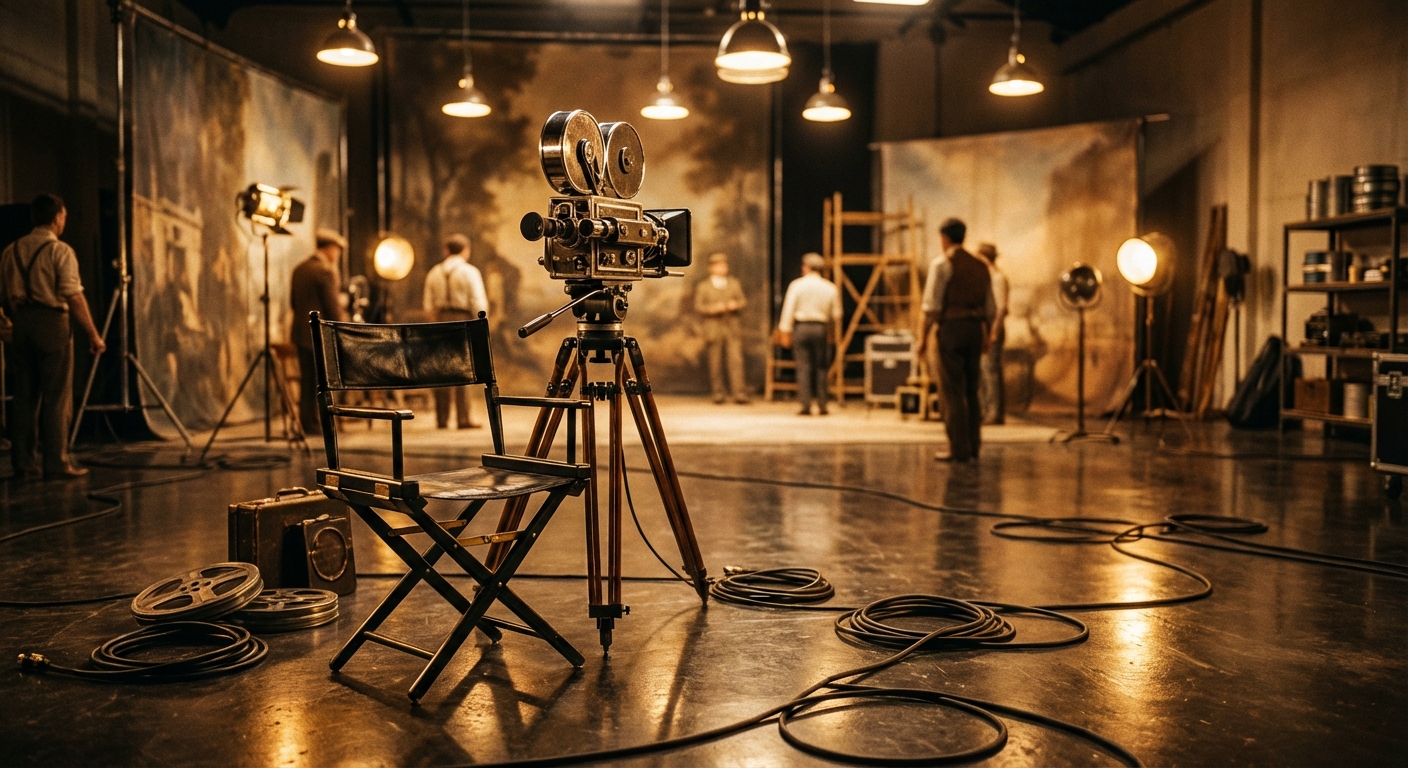
Peter used to say that every scene in a production must move the story forward. If it doesn't, it gets cut. It doesn't matter how well it's shot, how good the lighting is, how strong the performance. If it doesn't advance the narrative, it has no place in the film.
I realised the same principle applied to what we were delivering for clients. A brilliant video with no plan for what happens next is a scene with no sequel. The story ends there, and the client never sees the return they were expecting.
So I built a company that combined video production with the promotional work that actually drives results. Not just the creation - the full arc. Scene one through to close.
The Framework, Applied to Sales
I use the same lens on every sales interaction now. Every touchpoint - email, call, follow-up, meeting - is a scene. And the question I ask before every one of them is the same question Peter applied to every cut in the edit suite:
Does this move the story forward?
Not: is this polite? Not: have I been in touch recently? Not: does this cover my bases? Does it change something? Does it advance where we are?
In practice, a touchpoint moves the story if it does at least one of these:
- Surfaces a new piece of information about the buyer's situation
- Confirms or changes the next step
- Introduces or aligns a stakeholder
- Addresses a blocker directly
- Delivers something you said you would - evidence that you follow through
If the interaction doesn't do any of these, it's not a scene. It's filler. And in filmmaking and sales alike, filler gets cut.
Three Questions Before Every Touchpoint
Before I send an email or pick up the phone, I run through three questions:
1. What changes as a result of this?
If I send this email, what's different? If the answer is nothing - the buyer is in the same position, the deal is the same stage, nothing new has been exchanged - the interaction isn't ready. Find something that moves the story first.
2. Who is this scene for?
The best scenes in any film are the ones that serve the audience, not the director's ego. In sales, the buyer is the audience. If my touchpoint is primarily about my pipeline anxiety, my follow-up cadence, my process - it's a scene serving my needs, not theirs. Rewrite it.
3. What's the next scene?
Good scenes end with the setup for the next one. Every sales interaction should close with a confirmed next step - a specific time, a specific action, something both sides have agreed to. "I'll be in touch" is not a next scene. It's a fade to black with no sequel planned.
The Obvious Choice
Spain would have been fun. One year, probably. Then back to square one.
Five years at £2.50 an hour gave me a craft, a mentor, a first client, and a framework I still use every day. The ROI on that decision has compounded for over a decade.
Peter never talked about sales. He talked about production - about craft, about story, about the discipline of cutting everything that doesn't earn its place. But the principles transfer exactly.
Every scene must move the story forward. In film, in business, and in sales - if it doesn't, cut it.
Andrew has spent 12 years running go-to-market and sales for high-growth B2B companies. He founded Sixty Seconds to give every sales team access to the GTM firepower previously reserved for funded startups with large headcount.
The AI sales playbook, weekly.
Tactics, tools, and frameworks from 12 years of running GTM for high-growth companies. No fluff. Just what works.
No spam. Unsubscribe anytime.